Train Bash!
Train Bash! is a 3D, multiplayer party game where you and up to 1–3 friends complete in an intergalactic train demolition derby! Collect various train cars with unique abilities to gain an advantage. Bash your train into your opponents to knock them out of the competition.
Take on the role of a train conductor who was abducted by aliens to compete for their entertainment. Your train has been rebuilt and upgraded with the best alien tech to brave the arena. But are you prepared to do what it takes to win?
Project Size: 8 Developers and 6 Contractors
Project Timeline: Winter 2026 - Spring 2027
This project was created as a senior capstone project for my Game Design Degree at Indiana University Bloomington.
Teaser Trailer for Train Bash!
As the Game’s Lead Producer I was responsible for…
Project Responsibilities:
Creating and managing our backlog and analyzing burndowns and
sprint progress.Maintaining project scope for a year and a half long development.
Leading Joys and Vexations discussions about teamwork, conflict, and working on games projects.
Conducting retrospectives at the end of every sprint so that adjustments to scope and work could be made as needed.
Functioning as an Audio Lead for a contracted composer and
sound designer.Organizing playtests, focus groups, and player feedback to be presented to the team.
Planned personal milestones and goals for team members to achieve over the course of production.
Keeping stakeholders up to date about the game’s progress on key milestones and production.
Setting up and managing a LLC under Indiana state law.
Key Skills Learned:
Task Management
Risk Assessment
Mentorship, Coaching, and Leadership
Project Management
Navigating Conflict
Agile Methodologies
Software Skills:
Unreal Engine 5
Canva
Miro
ClickUp (Project Management Software)
Steamworks
Playtesting!
Over the course of development Train Bash! attended many external playtests to gain player feedback about current builds of the game. My role at these playtests was to monitor the game and record feedback that we received from players. I also developed a post-playtest survey to provide playtesters so that we could receive feedback on important aspects of the game that we were testing at each playtest.
At each playtest, I compiled a list of bugs to add to our bug log. I also sorted through key information to provide to team leads and the stakeholders about user responses to the game.
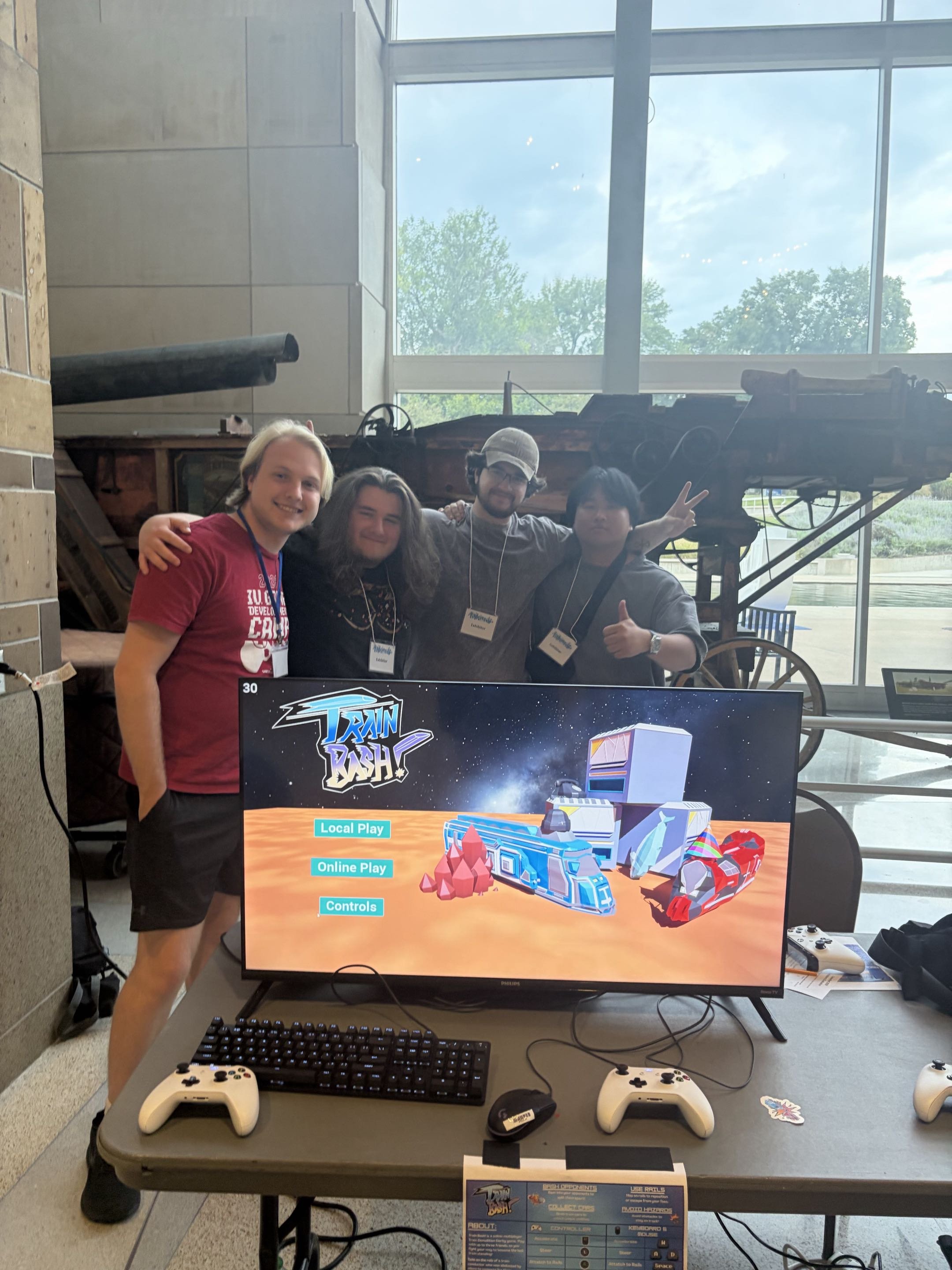
In the image to the right, we playtested Train Bash! at the Indiana State Museum with families and young children!
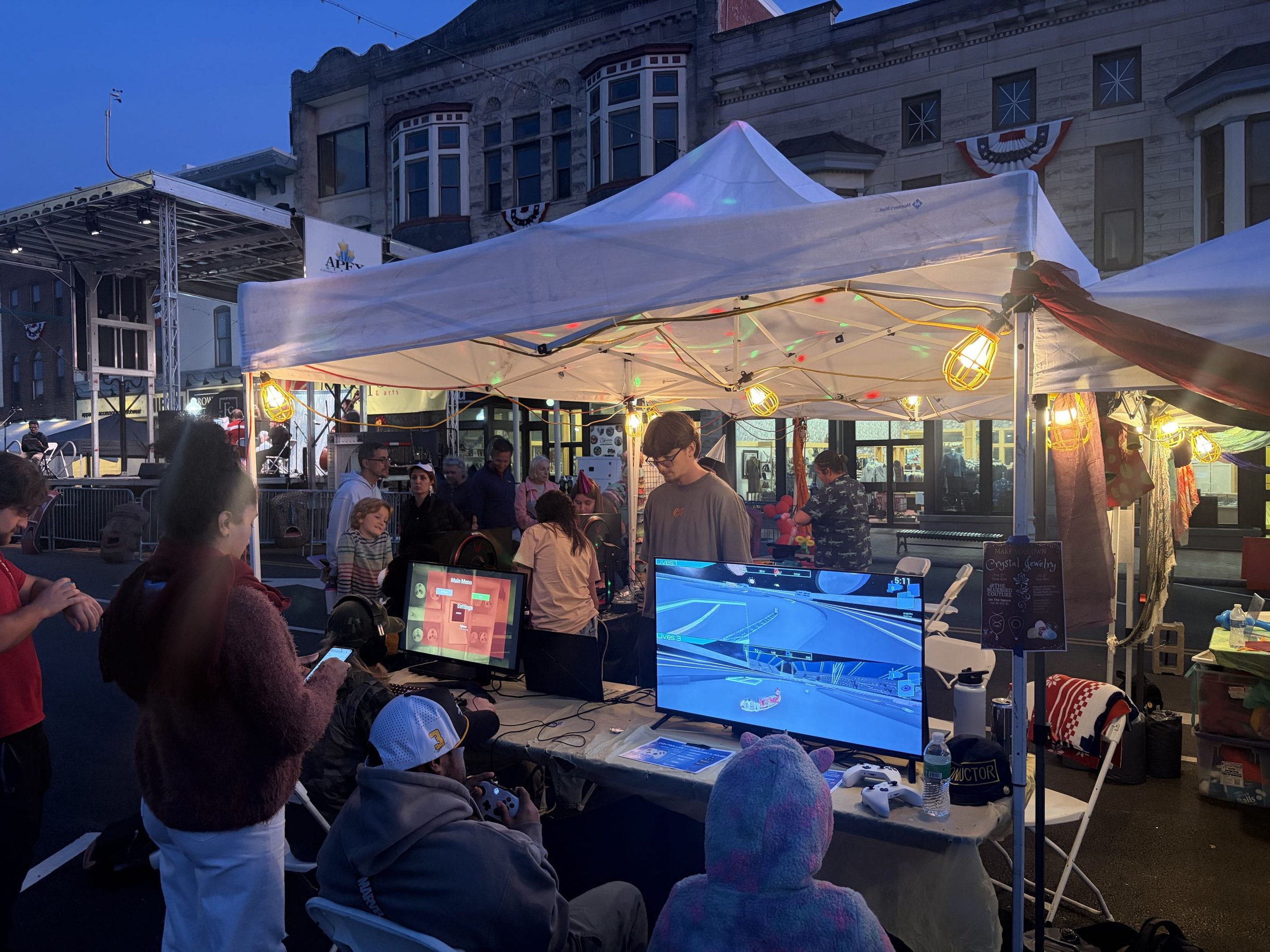
Train Bash! playtesting at Lotus Fest, an annual arts festival in Bloomington, Indiana.
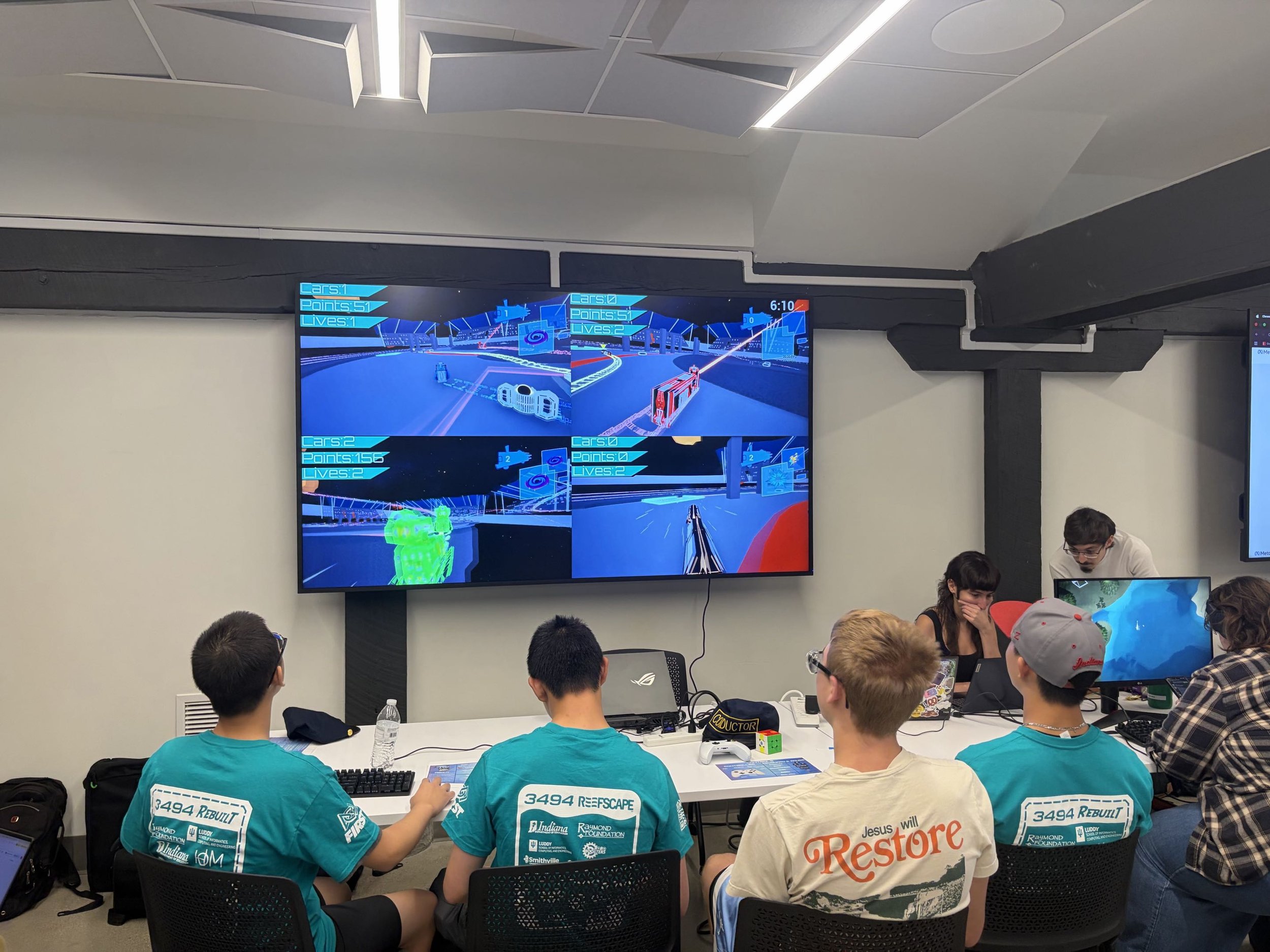
A robotics team playtesting Train Bash! at a tech and arts event in Bloomington, Indiana.
Example Project Documentation:
I created this document at the beginning of the project to list out milestones and key stakeholders. I also provided expectations for acceptance criteria, levels of done, and other general project expectations.
What I have learned so far:
This project has been extremely eye-opening as it is the first time that I fully stepped into the role of a producer on a game team. I have been able to learn so many lessons about working with people, managing tasks and milestones, and communicating with stakeholders. Through this project I have been able to fall in love with game production and the joys of helping my team achieve our goals!
Frequent Check-Ins. If I could go back and tell myself anything about what to do as I was starting work as a producer, it would be this. Many times over the course of this project, I found check-ins with my teammates to be extremely helpful. These check-ins helped me to discover hidden blockers, sort out team frustrations, and plan with each of my team members to create personal milestones for their professional development. Through checking in with my team often, I felt more connected and able to support them when problems arose.
Knowing when to say no. A lot of times in this development our development team and stakeholders wanted to add on new content and features that would increase scope. I had to balance not shutting down these cool ideas while at the same time protecting our timeline and making sure that we were on schedule for development. I took in any ideas towards the development, had conversations with the key members involved, and then made a decision with those members.
Trusting my leads. There were many times in early in development where I was unsure about the direction of the game. At the time I was acting both as a creative director and producer. Those two halves of my focus were in conflict with each other, and thanks to one of my mentors, I was recommended to focus more on the production and leave creative direction to my leads. I was nervous to do so at first since the game was one I pitched, but I recognized I needed to do so for the betterment of the project. Over time, I’ve been excited with where my leads have taken the
art style and design of the game, even if it wasn’t what I originally intended. It also allowed me to focus down on managing the game’s production and doing a better job as a producer.It is okay to take risks when possible. This project would not have gone as well as it did without taking a couple of risks on the development end. At the start of this project, we never even considered doing online multiplayer as it would’ve been out of scope for our team. However, I had one of our programmers spend a sprint testing out multiplayer systems when he was ahead on his tasks. He ended up getting the game up and running with these systems in mind. From there, we fleshed out our frameworks and have been working since to make Train Bash! an online multiplayer game. None of this would’ve been possible without taking some risks to see if it was possible in our development. I know it isn’t always possible, but when it is safe to do so and there isn’t the deadline of a release or budget rearing it’s head, spending some time on R&D or testing other new systems is not a bad idea.